


A trust can allow you the ability to keep control of certain assets and to determine who they will ultimately benefit. It can be a useful tool in both tax planning and family asset management. A trust does not have to be complicated to achieve its aim – although it is inevitably more complicated than, say, a simple gift of an asset or a legacy.
Just some of the everyday occasions where a trust might be useful are:
- to allow a person to continue to live in a house until they die (or choose to leave), and then arrange what will happen to that asset or its proceeds of sale after that
- to direct assets to children from a previous marriage or relationship but to exercise some degree of control over when they will be paid and upon what conditions
- to provide for a person who is (or will) suffer from a disability and would not be able to manage his or her own affairs without help from trustees
- to postpone decisions about transfers of assets to children or other issue until they are adults and settled in their arrangements – sometimes used in farming situations on succession
A trust can accomplish all of these tasks, and different degrees of influence and discretion can be awarded to the trustees as may be required. As a donor you can also express your wishes in a less formal ‘letter of wishes’ which (along with the trust deed itself) will be there to guide and assist the trustees when they come to make decisions concerning the trust and its assets.
If the event is to take place after the death of the donor then the trust can be incorporated into a Will – or it could be set up in the donor’s lifetime as an active trust or as a ‘pilot trust’ (a trust deed containing all of the required wishes but awaiting the receipt of funds).
We can assist with all of these aspects.
Trusts Team
Mark Butson
Partner
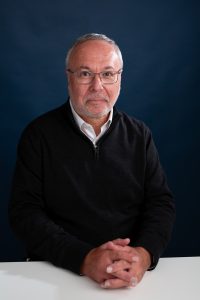
View Mark's Profile and Contact Details
Mark Butson
Mark joined the firm in 1983 as a trainee and qualified as a solicitor in 1985. He has been a partner/member since 1990 and is now our senior partner.
He has expertise in the preparation of wills and has considerable experience in the administration of estates - both where there is a Will and where there is none (an ‘Intestacy’) and in dealing with issues of interpretation where these arise. He can also advise on drafting deeds of family arrangement and related inheritance tax issues.
He regularly advises upon the creation and tailoring of Lasting Powers of Attorney and the operation of these in practice.
Mark advises in all aspects of conveyancing (both commercial and residential), including commercial landlord & tenant transactions. He has experience of dealing with boundary and rights disputes concerning property and ownership claims – including those by adverse possession.
He also advises small businesses in the practical resolution of employment issues.
Direct Line: 01289 301284
Email: mtb@tcsmith.co.uk
Frances Cowan
Partner
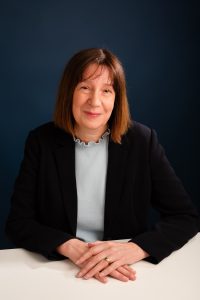
View Frances' Profile and Contact Details
Frances Cowan
Frances joined the firm in 2000, completed her training with T C Smith and qualified as a solicitor in 2002. She became a partner in August 2014.
Her interests are in all aspects of commercial conveyancing, including residential developments. She also has considerable experience in assisting with residential conveyancing.
Her family are actively involved with farming, and she has a keen interest in agricultural matters – heading up the firm’s agricultural section. In 2014 Frances qualified as a Fellow of the Agricultural Law Association, and this has enhanced her expertise in all areas of rural practice – including agricultural holdings, farm sales and purchases, estate planning & taxation
Frances also advises as to the preparation of Lasting Powers of Attorney and Wills – and the administration of estates.
Direct Line: 01289 301294
Email: fc@tcsmith.co.uk
Isobel Miller
Apprentice Solicitor

View Isobel's Profile and Contact Details
Isobel Miller
Isobel joined the Firm in 2023 having decided upon a career in the law. She is currently working through the Apprentice Solicitor programme with the aim of qualifying as a Solicitor in 2027.
Isobel has experience in Will writing and in the administration of estates and related private client work.
Direct Line: 01289 301293
Email: im@tcsmith.co.uk
Susan Dunbar
Probate Paralegal and Accounts Executive
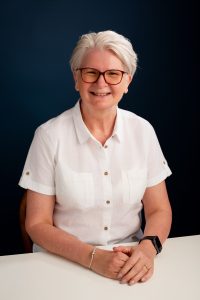
View Susan's Profile and Contact Details
Susan Dunbar
Susan initially joined the firm in 1979 and is now a paralegal specialising in the administration of estates in all aspects. Susan brings years of practical experience to the role and offers a helpful and effective service in this very important area of our work.
She has a friendly and approachable manner and is always willing to explain what has to be done to properly administer an estate to its correct conclusion, paying attention to the details that are so important to all concerned.
Susan also has many years working as our accounts executive and still retains a role in the area within the Firm, complementing her probate work.
Direct Line: 01289 301291
Email: smd@tcsmith.co.uk